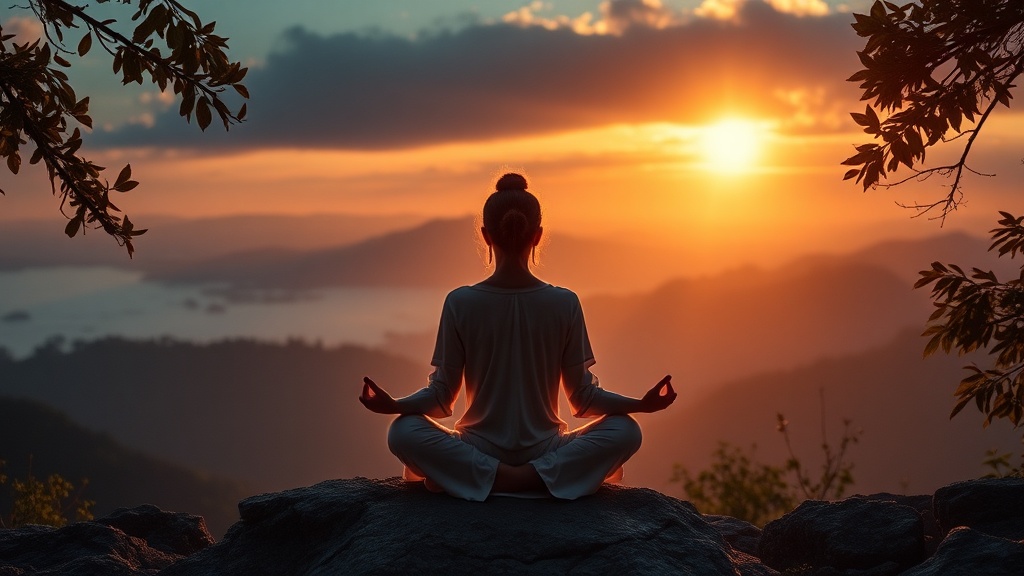
5 Morning Rituals to Cultivate Lasting Inner Peace

Morning sets the tone for everything that follows. This post covers five practical rituals—backed by research and rooted in ancient tradition—that help cultivate a sense of calm that lasts well beyond sunrise. Whether the days feel rushed or the mind won't quiet down, these habits create a stable foundation for clearer thinking, better emotional regulation, and a deeper connection to the present moment.
What Is the Best Morning Routine for Mental Clarity?
The best morning routine for mental clarity starts before the eyes even open. Upon waking, the mind drifts in a liminal space between sleep and full consciousness. This window—often called the hypnopompic state—is surprisingly fertile ground for intention-setting.
Before reaching for the phone (and let's be honest, that's the default reflex for most), try lying still for sixty to ninety seconds. Notice the breath. Notice the body against the mattress. This isn't meditation in the formal sense—it's simply arriving in the day before the day arrives in the inbox.
Studies from the American Psychological Association suggest that starting the day with even brief moments of present-moment awareness reduces cortisol spikes and improves focus for hours afterward. The Calm app offers excellent guided morning meditations for those who prefer structure, though a simple timer on the iPhone works just as well.
How Long Should a Morning Meditation Practice Be?
A morning meditation practice can be effective in as little as five minutes, though many practitioners find the sweet spot sits between ten and twenty minutes. The duration matters less than the consistency.
Here's the thing: sitting for an hour once a week won't build the neural pathways that a daily ten-minute practice will. The brain responds to repetition. Think of it like brushing teeth—brief, daily, non-negotiable.
For beginners, guided sessions remove the guesswork. Headspace and Insight Timer both offer free morning-specific tracks. More experienced practitioners might prefer silent sitting with a Tibetan singing bowl from the brand Thamelmart (hand-hammered models run around $45 on Amazon) or simply focusing on the sensation of breath at the nostrils.
The catch? Expectation kills the practice. Don't meditate to "get somewhere." Meditate to be where the feet already are. Some days the mind chatters like a crowded cafe. Other days it drops into stillness like a stone in deep water. Both are valid. Both count.
Worth noting: the posture matters more than most assume. A Zafu meditation cushion from DharmaCrafts—based in Vermont—provides the hip elevation that prevents the lower back from screaming after minute three. No cushion? Stack a couple of folded blankets. The spine should feel tall, the shoulders relaxed, the hands resting wherever they naturally fall.
Can Journaling Replace Meditation for Inner Peace?
Journaling cannot fully replace meditation for inner peace, but the two practices complement each other exceptionally well. Where meditation builds the capacity to witness thoughts without grabbing them, journaling offers a structured outlet to process what surfaces.
Morning pages—a technique popularized by Julia Cameron in The Artist's Way—involves three pages of longhand, stream-of-consciousness writing. No editing. No judging. Just the pen moving across the page of a Leuchtturm1917 notebook until the pages fill. Many practitioners report that dumping mental clutter onto paper before the day begins creates a lightness that's hard to describe but impossible to miss.
Not everyone has twenty minutes for pages. A faster alternative: the "Two-Minute Dump." Set a timer. Write every worry, task, and nagging thought into a cheap spiral notebook. Close it. Leave it on the desk. The mind, oddly enough, trusts that the thoughts are safely stored and stops looping them.
Structured journaling works too. The Five Minute Journal (Intelligent Change) provides prompts that direct attention toward gratitude and intention. Studies published in Harvard Health connect regular gratitude practices to measurable improvements in wellbeing and sleep quality.
Does Movement in the Morning Actually Reduce Stress?
Yes, morning movement measurably reduces stress by lowering cortisol, boosting endorphins, and improving circulation to the prefrontal cortex. The type of movement, however, shapes the effect.
A comparison of popular morning movement practices:
| Practice | Duration | Best For | Equipment Needed |
|---|---|---|---|
| Sun Salutations (Yoga) | 10–15 min | Flexibility, breath-body connection | Yoga mat (Manduka Pro recommended) |
| Tai Chi | 15–20 min | Balance, meditative movement | None—barefoot on grass preferred |
| Brisk Walking | 20–30 min | Cardiovascular health, vitamin D | Supportive shoes (Hoka Bondi 8) |
| Qi Gong | 10–20 min | Energy cultivation, joint mobility | None |
The key isn't intensity—it's intention. A frantic HIIT session at 6 AM might spike adrenaline in ways that undermine calm. Gentle, deliberate movement (the kind where breath and motion sync) tends to serve the goal of inner peace more effectively.
Yoga practitioners in Calgary have excellent local options. Breathe Hot Yoga in Kensington offers early morning vinyasa classes starting at 6:30 AM. For home practice, Yoga with Adriene (free on YouTube) provides approachable twenty-minute sessions that require nothing more than floor space and a willingness to show up.
How Do You Build a Morning Ritual That Actually Sticks?
A morning ritual sticks when it's anchored to an existing habit and designed to be embarrassingly small at the start. The biggest mistake? Building an elaborate routine that collapses under its own weight by Wednesday.
Start with one ritual. Just one. Five minutes of breath awareness. Three minutes of journaling. A single sun salutation. Stack it onto something already automatic—brushing teeth, brewing coffee in the Breville Barista Express, stepping out of the shower. The brain loves familiar sequences. When the new habit piggybacks on an old one, resistance drops dramatically.
Track streaks if motivation helps. The Streaks app ($4.99 on the App Store) offers a clean interface for habit tracking without the bloat of gamification. Or go analog: mark an X on a wall calendar. There's something deeply satisfying about a chain of red Sharpie marks that no app can replicate.
Expect disruption. Travel happens. Illness happens. The alarm doesn't go off and the morning evaporates into chaos. That said, one missed day doesn't break a ritual—quitting does. The practice isn't about perfection; it's about returning. Again and again.
Authoritative research from the National Center for Complementary and Integrative Health confirms that mindfulness-based practices—when practiced regularly—produce measurable changes in brain structure and stress response. The prefrontal cortex thickens. The amygdala (fear center) shows reduced reactivity. These aren't subjective feelings. They're physical changes that take root through repetition.
Morning rituals aren't about becoming someone different. They're about meeting the day—and the self—with a little more presence, a little more patience, and a lot less reactivity. Start small. Stay consistent. The peace follows.