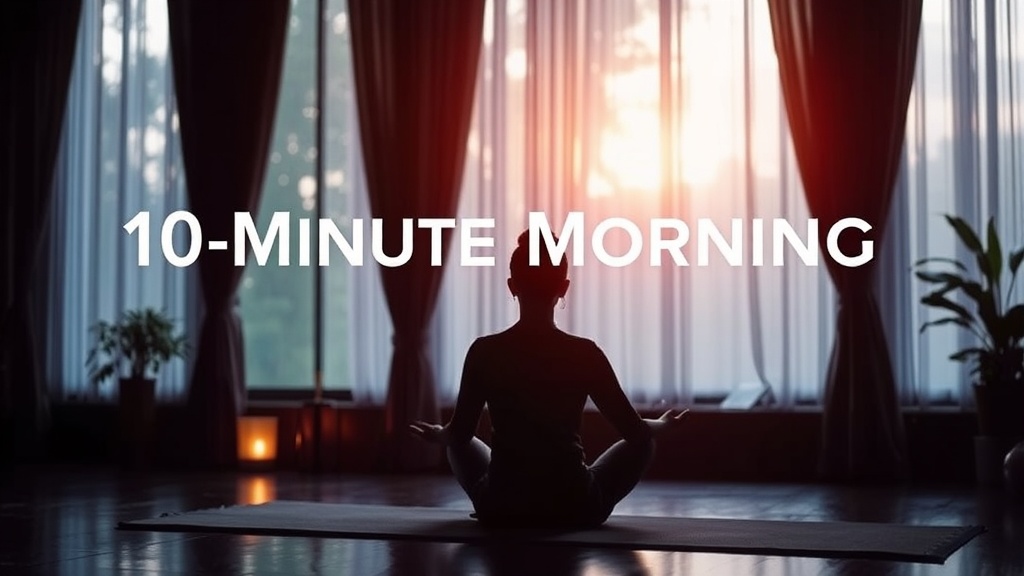
10-Minute Morning Meditation: A Complete Beginner's Guide

This guide covers everything needed to start a 10-minute morning meditation practice from scratch. You'll learn the exact steps, what to expect, which apps actually help beginners, and how to work through common obstacles that trip people up in the first two weeks. No prior experience required.
Why Meditate in the Morning?
Morning meditation works with your body's natural rhythms. Cortisol levels peak shortly after waking—that's your built-in alertness hormone. Instead of immediately flooding that alertness with emails and notifications, meditation channels it.
The practice sets a baseline. Think of it like tuning an instrument before a performance. The rest of your day plays out differently when you start from a place of steadiness rather than reactive mode.
Research backs this up. A 2011 study published in Psychiatry Research found that consistent meditation practice actually changes gray matter density in brain regions associated with stress. The hippocampus—your memory center—shows increased density. The amygdala, which governs fear responses, shows decreased density. Real structural changes from sitting still.
Here's the thing: morning practice isn't about becoming a "morning person." It's about capturing your mind before the day's momentum takes over. Once you're in the thick of responsibilities, mental space shrinks. The window between waking and engaging with the world is your opportunity.
What Do You Actually Do During a 10-Minute Session?
You sit comfortably, focus attention on a single anchor (usually the breath), and return to that anchor when the mind wanders. That's it. The simplicity is deceptive—it's also why beginners get frustrated.
Here's a breakdown of what those ten minutes look like in practice:
| Time | Activity | What Happens Mentally |
|---|---|---|
| 0:00–1:00 | Settle into position, close eyes, take three deep breaths | Mind often races through the day's to-do list |
| 1:00–3:00 | Find the breath, establish rhythm | Body awareness increases; you notice tension |
| 3:00–6:00 | Maintain attention on breath sensations | First wave of distraction—thoughts pull at attention |
| 6:00–8:00 | Continue, gently returning when distracted | Mind may settle or become more active (both normal) |
| 8:00–9:30 | Begin expanding awareness to full body | Integration—sense of groundedness often emerges |
| 9:30–10:00 | Open eyes slowly, notice surroundings | Transition back; carry awareness into movement |
The catch? Your mind will wander. Probably dozens of times. That's not failure—it's the practice. Noticing distraction and returning to the breath builds the mental muscle you're here to develop.
Position Matters Less Than Consistency
You don't need to sit cross-legged on the floor. A kitchen chair works. The edge of your bed works. What matters: spine relatively straight, shoulders relaxed, hands resting somewhere comfortable. Some people use a Cushion Lab meditation cushion. Others stack a couple pillows. Others sit on a folded blanket.
If you have back issues, try meditating against a wall. If your legs fall asleep, shift position. Comfort prevents the "meditation is torture" association that makes people quit.
Which Apps Actually Help Beginners?
Guided meditation apps provide structure for the first month. They remove the "am I doing this right?" anxiety and offer variety when sitting in silence feels overwhelming.
Three apps dominate the market for good reason:
Headspace — Founded by Andy Puddicombe, a former Buddhist monk. The beginner course ("Basics") is ten sessions, ten minutes each. The instruction is clear, the animations explain concepts well, and the progression feels logical. Subscription runs about $12.99/month. The free tier includes the Basics course and some sleep content.
Calm — More ambient and less structured than Headspace. Better if you want nature sounds, music, or less talking. The "Daily Calm" is a new 10-minute session every day. Also $12.99/month. The sleep stories are genuinely effective—narrated by voices like Matthew McConaughey and Harry Styles.
Insight Timer — Completely free for the core features. Thousands of guided meditations from various teachers. Less curated, which means more digging to find quality content. Worth noting: the community features (groups, progress sharing) motivate some people and distract others.
That said, apps aren't mandatory. A simple timer works. The Insight Timer app offers a free timer with interval bells—useful for marking time without looking at a screen. Some people prefer the Muji "Soothing Sounds" album on Spotify or complete silence.
What Should You Expect in the First Two Weeks?
Expect inconsistency. Some sessions feel peaceful. Others feel like mental chaos. Both are normal. The mistake beginners make: judging practice by how "good" it felt.
Here's what typically happens:
- Days 1–3: Novelty carries you. You feel virtuous for starting. The time passes slowly.
- Days 4–7: Resistance sets in. The alarm feels earlier. You question whether this is working. This is the first dropout zone.
- Days 8–12: If you've pushed through, a subtle shift occurs. You notice your breathing during the day without trying. The practice feels less foreign.
- Days 13–14: Two weeks establishes a behavioral foothold. Missing a day feels like something's off—not because you're addicted, but because your body recognizes the routine.
Physical sensations vary widely. Some people feel warmth or tingling. Others feel nothing special. Neither indicates progress or failure.
"The goal of meditation isn't to control your thoughts. It's to stop letting them control you."
This quote circulates widely because it captures the misunderstanding. You're not trying to empty your mind. You're practicing awareness of what the mind is already doing.
How Do You Handle Common Obstacles?
Every beginner hits walls. Preparation helps.
"I Don't Have Time"
Ten minutes is the minimum effective dose. Not the ideal. The minimum. If you genuinely cannot find ten minutes, examine your morning routine. Social media checking? News scrolling? These consume more than ten minutes without providing returns.
Here's the thing: meditation creates time. Not literally—but the focus you develop reduces wasted mental energy throughout the day. Many practitioners report completing tasks faster after consistent practice.
"I Keep Falling Asleep"
Common. Especially if you're meditating in bed or immediately after waking. Solutions: splash cold water on your face first. Meditate with eyes slightly open, gaze lowered. Stand instead of sit. Move your session thirty minutes after waking rather than immediately.
"My Mind Won't Stop Racing"
This is like saying "I can't lift weights because I'm not strong." The racing mind is why you're practicing. The practice isn't about stopping thoughts—it's about changing your relationship to them.
Try labeling: when a thought arises, note "planning" or "remembering" or "worrying" silently, then return to breath. The label creates a tiny bit of distance between you and the thought content.
"I Missed a Day and Feel Guilty"
Guilt is counterproductive. Just resume. Missing one day doesn't erase previous practice any more than missing one workout erases fitness. The danger isn't missing a day—it's letting that missed day become a missed week, then a missed month.
What Results Can You Realistically Expect?
After two weeks of consistent 10-minute morning meditation, most people report:
- Improved sleep onset. Not necessarily sleeping longer, but falling asleep faster. The relaxation response learned during meditation transfers to bedtime.
- Reduced reactivity. The gap between trigger and response widens slightly. You still get irritated—you just notice it happening.
- Better focus during demanding tasks. The ability to return attention to a single point (breath) translates to returning attention to work.
- Greater body awareness. You notice tension in shoulders, jaw, or hands before it becomes pain.
Worth noting: meditation isn't a replacement for therapy, medication, or medical treatment. It's a complementary practice. If you're experiencing severe anxiety or depression, consult a professional. The Mindful.org website offers resources on integrating meditation with mental health support.
Building the Habit
Habit research suggests linking new behaviors to existing routines. After you pour morning coffee, meditate. After you brush your teeth, meditate. The existing habit becomes a trigger for the new one.
Environment matters. If possible, meditate in the same spot daily. The brain associates that space with the practice. Over time, simply entering that space initiates a shift in mental state.
Track progress if that motivates you. A simple X on a calendar. The Habitica app gamifies habits for people who respond to streaks and rewards. Others find tracking creates pressure—skip it if that's you.
Start tomorrow. Not Monday. Not next month. Tomorrow morning, set a timer for ten minutes, sit down, and follow your breath. The instruction is simple. The commitment is what transforms it.